Embark on a Historic Voyage: Croatian Cities on the Coast
Share this article:
Historic Croatian cities and harbors stand as enduring witnesses to Croatia’s rich maritime legacy, weaving together tales of exploration, trade, and cultural exchange. Nestled along the pristine Adriatic coastline, these ancient maritime hubs have played pivotal roles in shaping Croatia’s cultural identity and economic prosperity throughout the centuries. As gateways to the world, they have facilitated trade routes, welcomed travelers from distant lands, and served as bustling centers of commerce and exchange.
Table of Contents
1. Dubrovnik Harbor: Gateway to the Adriatic
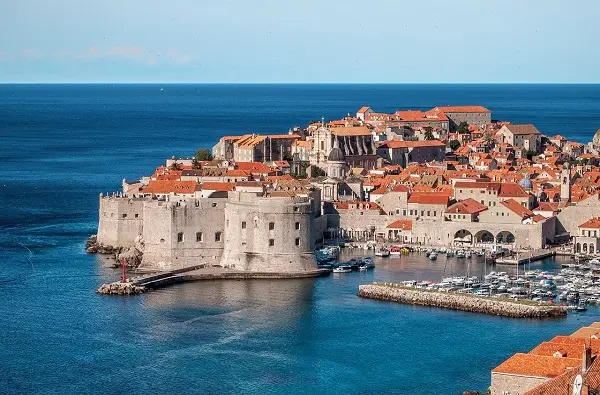
Nestled along the rugged coastline of the Adriatic Sea, Dubrovnik Harbor stands as a majestic sentinel, welcoming travelers to one of Croatia’s most iconic destinations. With its crystalline waters and fortified walls, this historic port city has long been celebrated as the “Pearl of the Adriatic,” captivating visitors with its timeless beauty and rich maritime heritage. Dubrovnik is, indeed, one of the most famous historic Croatian cities and harbors.

At the heart of Dubrovnik’s harbor lies a story that spans millennia, tracing its origins back to ancient times when it served as a crucial hub for maritime trade in the Adriatic region. As one of the wealthiest and most powerful maritime republics in the Mediterranean, Dubrovnik flourished as a center of commerce and culture, attracting merchants, sailors, and scholars from across the known world.
The harbor itself, nestled beneath the towering ramparts of the city walls, served as the lifeblood of Dubrovnik’s economy, facilitating trade routes that stretched from the shores of Italy to the distant ports of the Levant. Merchants would ply their wares, exchanging goods ranging from spices and silk to precious metals and exotic fruits, while ships of all sizes crowded the bustling waterfront, loading and unloading cargo bound for distant shores.
But Dubrovnik’s significance extended beyond its economic prowess; it was also a beacon of maritime innovation and diplomacy, forging alliances with neighboring city-states and fending off would-be conquerors with its formidable fleet of ships. The city’s strategic location at the crossroads of East and West made it a prized possession for competing empires, resulting in centuries of conflict and conquest that left their mark on its storied streets and harbor.
Today, Dubrovnik Harbor continues to enchant visitors with its timeless charm, offering a glimpse into a bygone era while embracing the modern world. From the bustling marinas filled with sleek yachts to the historic quays where fishermen mend their nets, the harbor remains a vibrant tapestry of past and present, where echoes of centuries-old seafaring traditions mingle with the rhythms of contemporary life.
As the gateway to the Adriatic, Dubrovnik Harbor beckons travelers to embark on a journey of discovery, where every winding alleyway and weathered stone tells a story of adventure, resilience, and the enduring spirit of Croatia’s coastal communities. Whether exploring the ancient city walls, savoring local delicacies at seaside cafes, or simply watching the sun set over the shimmering waters of the Adriatic, visitors to Dubrovnik Harbor are sure to be captivated by its timeless allure.
2. Split Port – A Meeting Point of History and Trade
As the shimmering waters of the Adriatic stretch beyond the horizon, Split Port emerges as a testament to Croatia’s maritime heritage and a vibrant hub where history and commerce converge. Nestled along the Dalmatian coast, this historic port city boasts a legacy that spans over seventeen centuries, dating back to its origins as the palace complex of Roman Emperor Diocletian.
Split Port’s origins lie intertwined with the ancient walls of Diocletian’s Palace, a UNESCO World Heritage site and one of the most well-preserved Roman monuments in the world. Constructed in the 4th century AD, the palace served as a luxurious retreat for the emperor and later evolved into the heart of the bustling city of Split. The port, strategically located along the palace’s southern facade, played a pivotal role in the city’s development, serving as a gateway to the Adriatic and facilitating trade with distant lands.

Over the centuries, Split Port grew in importance as a maritime center, attracting merchants, sailors, and travelers from across the Mediterranean. Its sheltered waters provided a safe harbor for ships navigating the treacherous waters of the Adriatic, while its strategic location made it a vital link in the maritime trade routes that connected Europe, Asia, and Africa.
Today, Split Port remains a bustling hive of activity, where fishing boats and luxury yachts jostle for space alongside cargo ships and ferries. The waterfront promenade, known as the Riva, buzzes with life as locals and visitors alike stroll along its sun-drenched esplanade, enjoying panoramic views of the azure sea and nearby islands.
At the heart of Split Port lies the historic ferry terminal, where ferries depart daily for the nearby islands of Hvar, Brac, and Vis, offering travelers the opportunity to explore the pristine beauty of the Dalmatian archipelago. Meanwhile, the port’s marina, situated just a stone’s throw from Diocletian’s Palace, provides berths for luxury yachts and sailing vessels, catering to the needs of discerning travelers seeking to explore the Adriatic in style.
But beyond its role as a maritime gateway, Split Port is also a living museum, where centuries of history are etched into its weathered stone walls and labyrinthine alleyways. From the ancient columns of Peristyle Square to the medieval charm of the Old Town, every corner of Split Port tells a story, inviting visitors to step back in time and experience the rich tapestry of Croatia’s maritime past.
In the shadow of Diocletian’s Palace, Split Port stands as a testament to the enduring legacy of Croatia’s coastal communities, where tradition and modernity intertwine to create a vibrant and dynamic maritime center. Whether exploring its historic landmarks, savoring fresh seafood at waterfront restaurants, or simply soaking up the sun on its palm-lined promenade, visitors to Split Port are sure to be captivated by its timeless charm and maritime allure.
3. Zadar Harbor – Echoes of Antiquity on the Waterfront
Nestled along the picturesque coastline of northern Dalmatia, Zadar Harbor emerges as a captivating blend of ancient history and modern charm. With its cobblestone streets, Venetian architecture, and panoramic views of the Adriatic Sea, this historic port city offers visitors a glimpse into Croatia’s rich maritime heritage and cultural tapestry.
Zadar’s maritime roots run deep, dating back to ancient times when it served as a flourishing center of trade and commerce under Roman rule. The harbor, strategically located at the crossroads of maritime routes linking the Mediterranean with the Adriatic, played a pivotal role in the city’s prosperity, facilitating the exchange of goods and ideas between east and west.
One of the most iconic landmarks of Zadar Harbor is the ancient Roman forum, a sprawling complex of temples, basilicas, and public squares that once served as the heart of civic life in the ancient city. Today, visitors can wander among the ruins, marveling at the architectural prowess of the Roman Empire and imagining the bustling marketplace that once thrived in its midst.
But perhaps the most unique feature of Zadar Harbor is its modern-day attractions, which seamlessly blend ancient history with contemporary art and technology. Chief among these is the Sea Organ, an innovative musical instrument built into the city’s waterfront promenade that harnesses the power of the sea to create haunting melodies that echo through the air.
Adjacent to the Sea Organ is another marvel of modern engineering known as the Sun Salutation, a vast solar-powered installation that illuminates the waterfront with a mesmerizing light show each evening. Together, these two attractions serve as a testament to Zadar’s innovative spirit and its commitment to preserving its maritime heritage for future generations to enjoy.
Beyond its cultural attractions, Zadar Harbor also serves as a gateway to some of Croatia’s most scenic islands and coastal destinations. Ferries depart regularly from the harbor, whisking travelers away to the nearby islands of Ugljan, Pasman, and Dugi Otok, where pristine beaches, crystal-clear waters, and charming fishing villages await.
As the sun sets over the Adriatic, casting a golden glow over Zadar Harbor and its surrounding landmarks, visitors can’t help but be enchanted by the timeless beauty and maritime allure of this historic port city. Whether exploring its ancient ruins, savoring fresh seafood at waterfront restaurants, or simply soaking up the atmosphere along the promenade, a visit to Zadar Harbor is sure to leave a lasting impression on all who venture there.
4. Pula Port – Anchoring Croatia’s Naval Legacy
Located on the southern tip of the Istrian Peninsula, Pula Port stands as a testament to Croatia’s maritime legacy and its strategic importance throughout the ages. With its ancient Roman ruins, bustling waterfront, and panoramic views of the Adriatic Sea, this historic port city offers visitors a glimpse into Croatia’s rich maritime heritage and cultural heritage.
Pula’s maritime history dates back over two millennia, with its origins rooted in the ancient Roman era when it served as a crucial naval outpost and trading center in the Adriatic. The crown jewel of Pula Port is undoubtedly the iconic Roman amphitheater, one of the best-preserved ancient arenas in the world and a testament to the city’s illustrious past as a center of entertainment and spectacle.

But Pula’s maritime legacy extends beyond its ancient ruins; it is also a thriving modern port city, with a bustling harbor that serves as a hub of activity for commercial shipping, fishing, and tourism. The port’s strategic location at the crossroads of maritime routes linking the Mediterranean with central Europe has made it a vital gateway for trade and commerce, facilitating the exchange of goods and ideas between east and west.
Today, visitors to Pula Port can explore its historic waterfront, where ancient Roman ruins mingle with modern-day amenities and attractions. The harbor is lined with charming cafes, seafood restaurants, and artisan shops, where visitors can sample the local cuisine and soak up the atmosphere of this vibrant maritime community.
But perhaps the most striking feature of Pula Port is its natural beauty, with its crystal-clear waters, rugged coastline, and stunning vistas of the Adriatic Sea. From the historic lighthouse at Verudela Point to the picturesque islands of Brijuni National Park, the harbor offers endless opportunities for exploration and discovery.
As the sun sets over the Adriatic, casting a golden glow over Pula Port and its surrounding landmarks, visitors can’t help but be captivated by the timeless beauty and maritime allure of this historic port city. Whether exploring its ancient ruins, sampling local delicacies at waterfront eateries, or simply strolling along the waterfront promenade, a visit to Pula Port is sure to leave a lasting impression on all who venture there.
5. Rijeka – The Heart of Historic Croatian Cities and Harbors
Situated at the northern tip of the Kvarner Gulf, Rijeka Harbor emerges as a bustling maritime center and a key player in Croatia’s economic landscape. With its deep-water port, industrial facilities, and strategic location on the Adriatic Sea, this historic harbor city serves as a vital hub for shipping, trade, and commerce in the region.
Rijeka’s maritime heritage dates back centuries, with its origins rooted in the Middle Ages when it served as a prominent trading post for merchants from across Europe. Over the centuries, the city grew in importance as a maritime center, attracting merchants, sailors, and entrepreneurs drawn to its strategic location at the crossroads of major trade routes.
Today, Rijeka Harbor remains a hive of activity, with ships of all sizes navigating its busy waters, loading and unloading cargo bound for destinations around the world. The port’s state-of-the-art facilities, including container terminals, oil refineries, and shipyards, play a crucial role in Croatia’s economy, supporting industries ranging from manufacturing and logistics to tourism and hospitality.
But Rijeka Harbor is more than just a center of industry and commerce; it is also a vibrant cultural hub, with a rich maritime heritage that is celebrated through festivals, events, and attractions throughout the year. The city’s historic waterfront, lined with elegant Austro-Hungarian buildings and bustling cafes, serves as a focal point for locals and visitors alike, offering panoramic views of the harbor and the surrounding coastline.
One of the highlights of Rijeka Harbor is its annual Carnival, one of the largest and most vibrant festivals in Europe, which attracts thousands of revelers to the city each year to celebrate its maritime heritage and cultural diversity. During the Carnival, the waterfront comes alive with colorful parades, street performances, and music, creating a festive atmosphere that reflects the spirit of Rijeka’s maritime community.
As the sun sets over Rijeka Harbor, casting a golden glow over its bustling waterfront and historic landmarks, visitors can’t help but be captivated by the timeless beauty and maritime allure of this historic port city. Whether exploring its industrial facilities, sampling local cuisine at waterfront restaurants, or simply soaking up the atmosphere along the promenade, a visit to Rijeka Harbor is sure to leave a lasting impression on all who venture there.
Be sure to check out our guide on the best cities in Croatia.